Street Photography
Street Photography in the Age of Smartphones
In the age of smartphones and social media, street photography has become particularly trendy. Taking a photo of passers-by or urban elements to immortalize a moment or highlight an aesthetic has never been so easy. Although it has never left the art galleries, this photographic genre, born at the end of the 19th century, is experiencing a resurgence today.
IGWT represents two notable street photographers, Eric Houdoyer and Cássio Vasconcellos, who offer captivating series on Paris and Sao Paulo.

What is Street Photography?
Street photography is a photographic genre that emerged at the start of the 20th century. It involves taking photos outdoors and in public places, without any staging. The primary subject is the human presence, either immediate or suggested. This genre captures candid moments and the essence of everyday life, reflecting the spontaneity and diversity of urban environments.

Cássio Vasconcellos, METRO LOUVRE, series : Nocturnes Paris
What is Street Photography?
Street photography is a photographic genre that emerged at the start of the 20th century. It involves taking photos outdoors and in public places, without any staging. The primary subject is the human presence, either immediate or suggested. This genre captures candid moments and the essence of everyday life, reflecting the spontaneity and diversity of urban environments.
Criteria of Street Photography
Street photography is not simply taking pictures in the street. This genre meets several criteria. Photos must capture spontaneous situations, involving visible individuals or not. They must be taken in a public place in the broad sense (park, street, shopping center, etc.) and bear witness to human activity.

Street Photography: A Snapshot of Everyday Life
Street photography departs from photojournalism or documentary photography in that it does not convey a political or social message. Its essence is to represent everyday life—a photograph of the mundane. Historically, this genre has, however, illuminated underrepresented social groups, offering glimpses into their daily existence.
Brief History of Street Photography
The purpose of street photography is to capture passers-by and architectural elements in public spaces. This genre emerged with the development of photography in the 1890s. French photographers like Charles Nègre and later Eugène Atget first took street photographs to hone their skills and find compelling subjects. The advent of portable cameras further encouraged the growth of this genre, which truly took shape in the 1930s.
In Europe, figures like Henri Cartier-Bresson and Brassaï captured Paris through its nights, streets, and inhabitants. This movement then crossed the Atlantic, adopted by photographers like Berenice Abbott, who applied the same principles to the urban landscape of the United States.
Since the late 20th century and with the continuous rise in urban concentration, street photography has experienced a new boom.

Cássio Vasconcellos, Chicago #1, series : Nocturnes USA

Cássio Vasconcellos, Fura Fila #5, series : Nocturnes Sao Paulo
Photographing the Moment
Beyond capturing a detail or magnifying an urban space, street photography is above all about capturing the moment. In these spontaneous photographs, the subjects are often strangers, passers-by. The essence of this photographic genre is to seize a moment of life, an emotion, or a fleeting gesture, and immortalize it through the lens.
Contemporary Street Photography
Today, a new vision of street photography is emerging. Many photographers are adopting a more aesthetic approach, focusing on the colors and aesthetics of architectural elements.

Cássio Vasconcellos, Gantry Plaza State Park #1 New York, series : Nocturnes USA
Eric Houdoyer: Parisian Street Photography
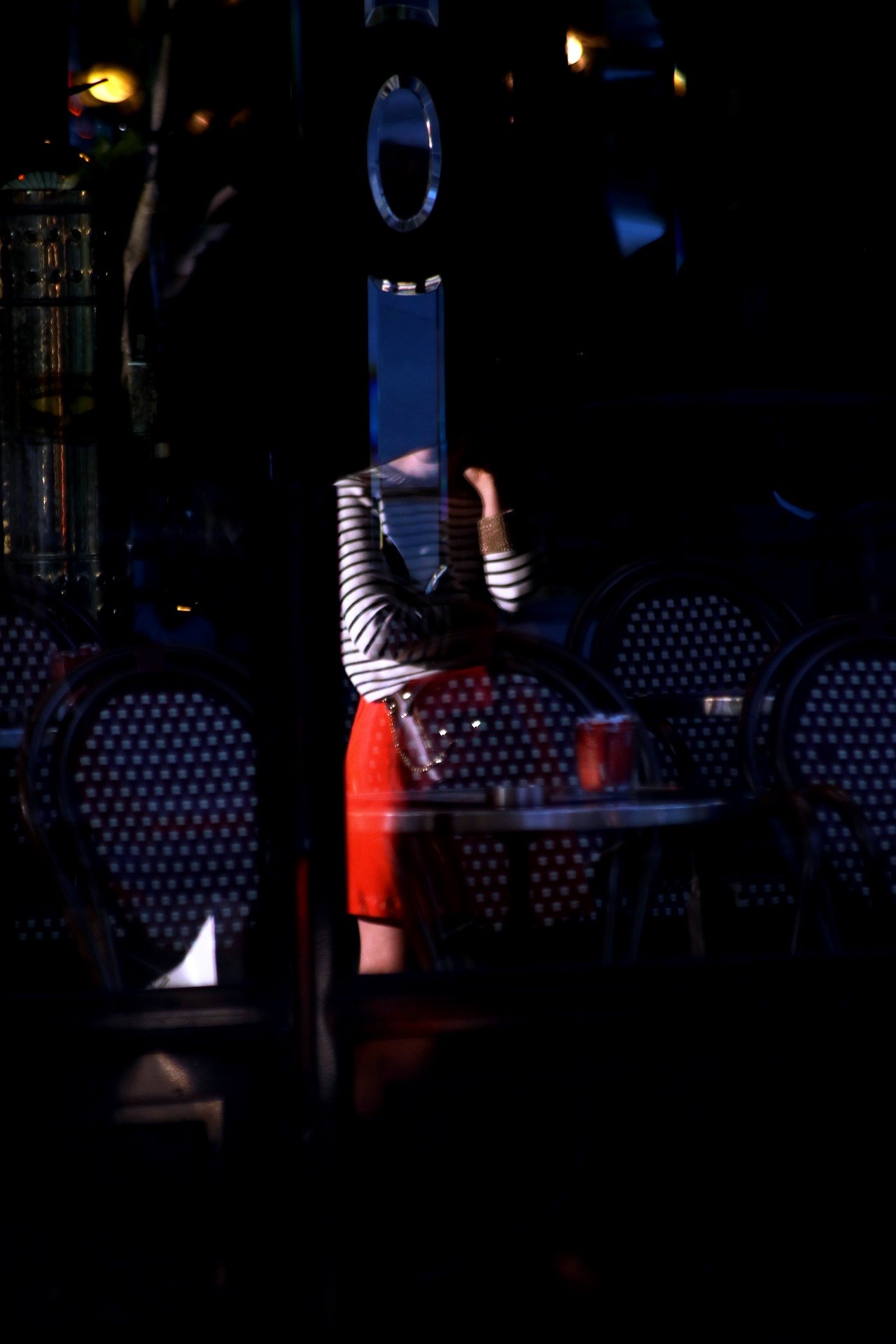
Eric Houdoyer is a French photographer based in Paris, renowned for his captivating portrayal of Parisian life in nuanced detail. His photographs focus on the gestures and postures of passers-by, documenting the bustling atmosphere of Parisian cafes, brasseries, and sidewalks. The protagonists in his work are often anonymous, their faces veiled in shadow, yet their silhouettes and movements animate the urban landscape adorned with vibrant red, green, and gold accents.

Eric Houdoyer, Géométrie, 2016

Atmosphere of Mystery in Eric Houdoyer’s Street Photography
Eric Houdoyer’s Parisian street photography is characterized by a captivating play of light and shadow, evoking an atmosphere akin to a mysterious thriller. His intriguing photographs invite projection and stimulate the imagination. By anonymizing and mystifying the subjects, Houdoyer’s work raises questions about human activity within the bustling streets of Paris.

Eric Houdoyer, Rencontre, 2015

Cássio Vasconcellos: Nocturnes Around the World
In his series “Nocturnes” (Paris, USA, São Paulo), Cássio Vasconcellos reveals a personal vision of these cities and urban spaces in general. He endeavors to capture iconic monuments and high-traffic areas such as airports or towers. Thus, urban spaces, which oscillate between symbolic and practical realms, are portrayed in their dual nature. By juxtaposing the scaffolding and metallic structures of São Paulo, Vasconcellos contrasts his idealized vision of the city with a more pragmatic reality.

Cássio Vasconcellos, Aeroporto de Congonhas #1, series : Nocturnes Sao Paulo

Cássio Vasconcellos : Estádio do Pacaembú #1, series : Nocturnes Sao Paulo
Revealing the City: Cássio Vasconcellos’ Perspective
Cássio Vasconcellos’ photographs reveal a complex relationship between the artist and the city. By decentering his gaze and capturing elements from unconventional angles, he paradoxically manages to unveil new perspectives.
His low-angle views are enriched by vibrant colors that starkly contrast with the darkness of the night. Through skillful use of light, Vasconcellos highlights the elements he captures. Statues come to life in the Parisian nights, and fountains appear to breathe fire under his lens.

Cássio Vasconcellos, Place Felix Eboué, series : Nocturnes Paris

Cássio Vasconcellos, Place des Vosges, series : Nocturnes Paris

Cássio Vasconcellos, Opéra, series : Nocturnes Paris


