Fashion photography
Understanding Fashion Photography
Fashion photography is a specialized genre devoted to showcasing clothing and fashion accessories within a specific style and context. It captures the essence of fashion trends and represents high fashion pieces worn by models staged by fashion photographers.
These photographs serve a commercial purpose, aiming to promote and sell garments or accessories by presenting them in an enticing and visually appealing manner. Thus, fashion photography plays a crucial role in influencing and reflecting contemporary fashion trends.

Jean-Daniel Lorieux, Dior Shoes – Tunisia
A Brief History of Fashion Photography
Fashion photography emerged during the 19th century (for more information, visit the website of the Fashion Museum of Paris). Initially, its distribution was limited. Magazines like Vogue, which debuted in the second half of the 19th century, predominantly featured fashion illustrations. It was not until the early 20th century that fashion photography began to surpass illustrations and establish itself in specialized magazines.
From the 1950s onward, photographers such as Richard Avedon and Douglas Kirkland rose to prominence as masters in this field, shaping and defining the art of fashion photography.

Douglas Kirkland, Audrey Hepburn, Glasses and hat

Douglas Kirkland, Coco Chanel (Roll 23 – Frame 7)
Evolution of Fashion Photography from the 1960s
During the 1960s, the proliferation of fashion magazines sparked a surge in demand for fashion photography, paving the way for new talents like Ormond Gigli and later Jean-Daniel Lorieux. Lorieux, a French fashion photographer, emerged in the 1970s, renowned for his vibrant, sun-drenched compositions and iconic use of blue skies in his work.

Ormond Gigli, Girl in the light, Black and white, 1967


Jean-Daniel Lorieux, Karen Mulder – CELINE

Jean-Daniel Lorieux, Azzaro – Spanish Wells – Vogue
Evolution of Fashion Photography into the 1990s
In the 1990s, the emergence of new fashion designers brought forth a new generation of photographers. Fashion photography also underwent transformation with the advent of digital photography and computer image processing.
What Makes a Fashion Photograph Iconic?
Originally confined to fashion magazines and advertising posters, fashion photography now extends its reach into museums, galleries, and auction houses. It may seem counterintuitive for these institutions to highlight photographs originally intended for commercial purposes. However, iconic fashion photographs displayed in these settings possess strong aesthetic and artistic value when removed from their original context.
Beyond their commercial objectives, these photographs often transcend mere representation of clothing or accessories. They tell compelling stories and reflect the unique perspectives of their creators. As a result, institutions often showcase photographs that have achieved iconic status or were produced by photographers who significantly influenced and advanced the genre of fashion photography.

Ormond Gigli, Girls in the windows, New-York, 1960

Ormond Gigli, Gwen Verdon, 1953
Fashion photographs attain iconic status when the photographer goes beyond merely capturing clothing and instead imbues the image with artistic expression. These iconic photographs transcend their original purpose of promoting fashion items; they become universally recognized and revered as works of art in their own right.

Jean-Daniel Lorieux, Olga – Pierre Cardin – Yellow

Jean-Daniel Lorieux, Dior – 2009
The Hand of Great Fashion Photographers
IGWT represents three famous fashion photographers: Ormond GIGLI, Douglas KIRKLAND, and Jean-Daniel LORIEUX.
Over the decades, fashion photography has earned its prestige through the artistic vision and style of these photographers. They skillfully stage models in original and aesthetic settings, despite the primarily commercial nature of their work. This artistic freedom allows them to create their own unique universes.
For instance, Jean-Daniel LORIEUX asserted his vibrant, unconventional, and sensual style in fashion magazines. His photographs, often captured in idyllic island settings, exude joy and emit a distinct energy.

Jean-Daniel Lorieux, Katherina – Christian Dior – Vogue

Jean-Daniel Lorieux, Givenchy – Vogue – Bahreïn

Jean-Daniel Lorieux, Li Sellgren – Paco Rabanne
Ormond GIGLI, an American photographer represented by IGWT, specializes in creating colorful and warm photographs that are meticulously staged. His distinctive approach imbues his fashion photographs with a timeless quality.

Ormond Gigli, Maud Adams, Greece, 1969
Exceptional models
Fashion photographs typically highlight models who showcase the clothing, enhancing their appeal and serving the commercial objectives of the photography.
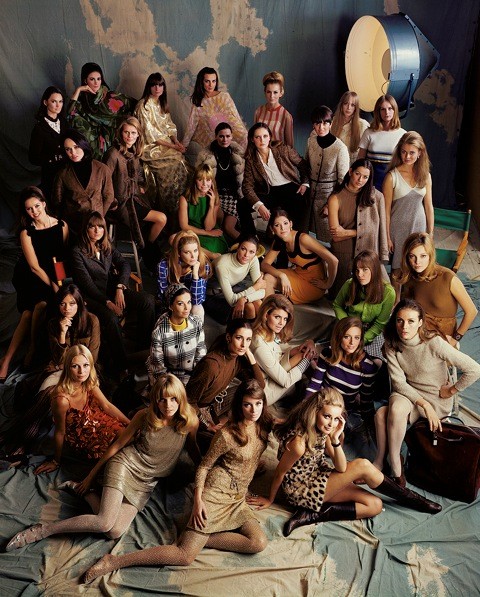
Ormond Gigli, Famous Ford Models, 1966

Douglas Kirkland, Audrey Hepburn in Givenchy with Glasses
Since the 1990s, with the rise of “supermodels,” these individuals have transcended mere models to become stars in their own right. Their presence in a photograph significantly enhances its value and amplifies its commercial appeal, making them pivotal in the composition of fashion photography.
Jean-Daniel LORIEUX, during the peak of his career, frequently staged the supermodel Stephanie Seymour in his work.

Jean-Daniel Lorieux, Stephanie Seymour – Dolce Gabbana


