Choosing Large Format Art Photography: Tips and Inspirations
Why and how to choose a large format fine art photography ?
Selecting large format art photography means engaging with the works of masters such as Jeff Wall or Massimo Vitali. IGWT guides you through this aesthetic journey, ideal for elevating both interior and professional spaces. But what makes these works so special?

Stephen WILKES, Santa Monica Pier, LA, 2013, series: Day to Night – Santa Monica beach is a perfect example of photo needing large format print.
The Visual Impact of Large Format
Large format transforms a mere photograph into a gateway to a world where every detail comes alive. It’s in this dimension that the art of photography fully expresses the monumentality of its subjects, be it through Mitch DOBROWNER’s epic landscapes or Stephen WILKES’s vibrant human scenes.

Mitch DOBROWNER, Natron Sunrise, série : Landscapes.

Mitch DOBROWNER, Mammatus, series: Storms.
Massimo VITALI and Stephen WILKES are celebrated photographers renowned for their ability to blend landscapes with human presence in their works. Utilizing large format photography, they capture numerous micro-scenes within a single image. Much like the detailed paintings of Flemish artist Pieter Brueghel, their photos invite viewers to observe and enjoy various moments of life. This expansive format serves to emphasize human activity against the vast backdrop of space and time, creating a striking contrast that highlights the interaction between people and their environment.

Stephen WILKES, Tournelle Bridge in Paris, 2013, series: Day to Night.

Stephen WILKES, Bethesda Fountain, series: Day to Night.

Stephen WILKES, Ipanema Beach, series: Day to Night.

Stephen WILKES, Millenium Park, Chicago, series: Day to Night.

Stephen WILKES, Blue Lagoon, Iceland, series: Day to Night.
Fashion Photography: Bigger is Better
Fashion photography has long embraced large formats, especially in poster campaigns. Each fashion photo is meticulously crafted to be visually striking, designed for giant posters and magazine spreads. Often, the condition is to be displayed on a full page, or ideally, across a double-page spread.
As a result, fashion photography inherently needs to occupy all the space it is given. After revisiting his archives, Ormond GIGLI released his most renowned fashion photographs in large-sized editions. We invite you to explore his iconic images that revolutionized the world of fashion photography.

Ormond GIGLI, Lips, 1960, 66 x 102 cm.
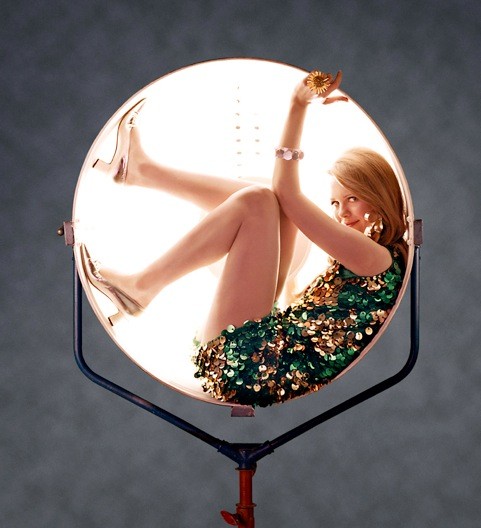
Ormond GIGLI, Girl in the light, 1967, 124,5 x 127 cm.

Ormond GIGLI, Girls in the windows, 1960, 127 x 127 cm.
Large Format to Make Them Shine
Douglas Kirkland, celebrated as the photographer of movie stars, has enjoyed an extraordinary career capturing the essence of Hollywood over the past 50 years. His work spans numerous film sets, creating a visual legacy of the golden era of cinema. IGWT offers a unique opportunity to explore his most stunning photographs, including the iconic series of portraits of Marilyn Monroe.
Kirkland’s large format film photos were often used as promotional posters, providing a glimpse into the movie’s world before audiences even entered the theater. These images possess a powerful narrative quality, allowing viewers to imagine the story, thereby drawing them into the cinematic experience. His photographs have become synonymous with Hollywood glamour and elegance, capturing the personalities and auras of movie stars in a way that few others have achieved. This storytelling aspect makes his work timeless and compelling, inviting viewers to delve into the emotions and contexts behind each image.
The historical significance of Kirkland’s portfolio cannot be overstated. His work documents the evolution of the film industry and its stars, with his photographs of Marilyn Monroe, in particular, becoming cultural icons that symbolize an era of cinematic magic. His use of large format film brings out exceptional detail and clarity, enhancing the visual impact of his work. The scale and quality of these images allow for an immersive viewing experience, making them perfect for prominent display.
As promotional posters, Kirkland’s photographs served to intrigue and captivate potential audiences. They provided a sneak peek into the film’s world, effectively setting the tone and building anticipation for the movie. By featuring Douglas Kirkland’s large format photographs, IGWT not only showcases stunning works of art but also celebrates the rich history and enduring allure of Hollywood cinema. These images are more than just photographs; they are windows into the glamorous and captivating world of movie stars, offering viewers a chance to connect with the magic of the silver screen.

Douglas KIRKLAND, Marilyn Monroe, 1961, 93 x 118 cm, series: “An evening with Marilyn“.

Douglas KIRKLAND, Out of Africa, 1985, 93 x 118 cm.

Douglas KIRKLAND, Brigitte Bardot, 1965, 93 x 118 cm.
When animal photography becomes elephantine
To capture the majesty of the animal kingdom, large format prints are a powerful tool. This demands high-quality photography with impeccable composition, as even the slightest blurring is unacceptable. Large formats expose every detail, revealing any flaws to the viewer’s eye.
Kyriakos KAZIRAS exemplifies the talent and patience needed to create animal photos perfect for large formats. His renowned series, “Elephant Dream,” transports us to the African savannah, introducing us to every member of the herd—from protective matriarchs and solitary old males to shy baby elephants. His polar bear photographs exude a purity and elegance ideal for large-scale prints.

Kyriakos KAZIRAS, Heroes, 80 x 120 cm, series: Elephant Dream.

Kyriakos KAZIRAS, The Walk, 80 x 120 cm, series: Elephant Dream.

Kyriakos KAZIRAS, A day of memories, 60 x 120 cm,series: Elephant Dream.

Kyriakos KAZIRAS, Ode à la joie, 80 x 120 cm, series: Elephant Dream.
The Grandeur of Photographed Places
Large format photography can effectively convey the uncanniness of a place. Artist Stefano CERIO’s photo prints emphasize the absence of people, capturing the essence of a location and evoking its appearance in our memories. In his series, amusement parks, ski resorts, and cruise ships are depicted devoid of their usual crowds, presenting a unique perspective.
Stefano CERIO utilizes a large format camera to achieve this effect, allowing him to capture the subtle nuances of colors and lights. This technique enhances the viewer’s experience, revealing the true character and grandeur of these leisure places.
Discover the striking works of Stefano CERIO and see how he masterfully uses large format photography to transform ordinary locations into extraordinary visual experiences.

Stefano CERIO, Aquapiper Guidonia (RM), 2010, series: Aquapark.

Alessandro PIREDDA, Duomo, Milano, 110 x 110 cm, series: Darkitectures.

Romain VEILLON, Sands of time, 100 x 150 cm, series: Urbex à Kolmanskop.
Capturing the Passage of Time
Romain VEILLON, an urbex photographer, focuses on the concept of absence. His large format photographs depict abandoned and often dilapidated locations, highlighting the passage of time and reflecting the vanity of human constructions and the depth of history.
In contrast, Alessandro PIREDDA captures enduring architectural marvels within bustling cities, such as cathedrals, basilicas, and various religious buildings. He uses nighttime photography and black-and-white imagery to convey a timeless quality.
We invite you to explore the work of this exceptionally talented young Italian photographer. If you have a particular interest in black-and-white photography, be sure to check out our dedicated article on the subject.


